
English| EUR
Suggested for you
More currencies
Choose a language
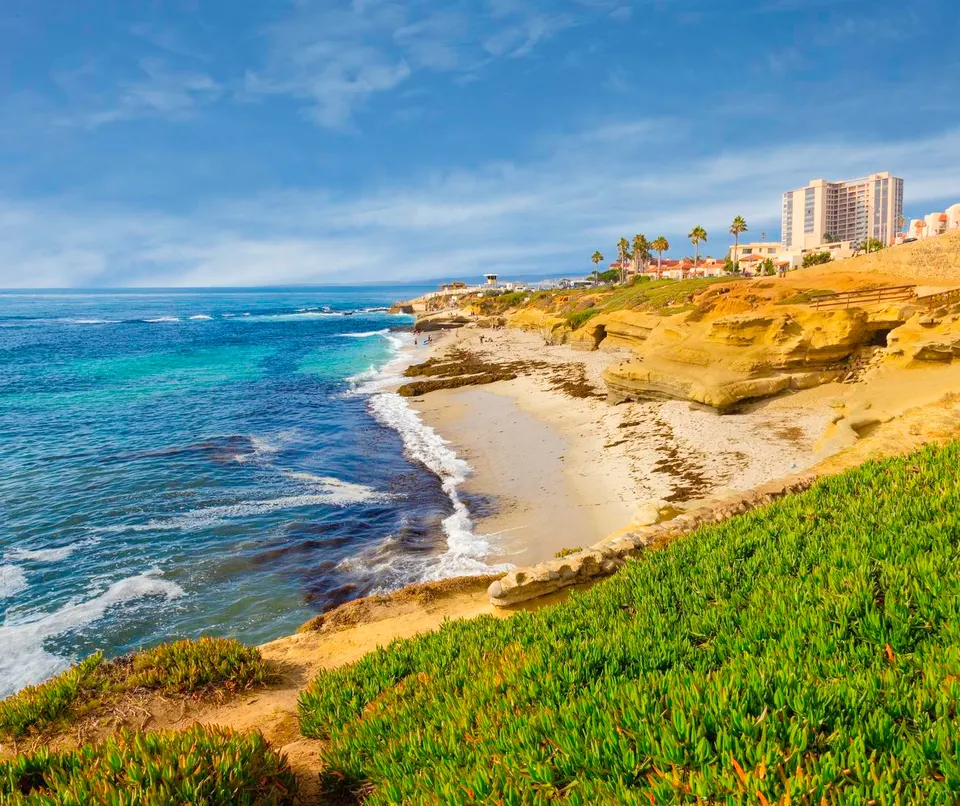
La Jolla Cove stands apart from San Diego's 70 miles of coastline as the beach where natural geography and consistent professional oversight converge. The small crescent inlet offers conditions that minimize the hazards typical of Pacific surf zones. This guide explains what makes the Cove uniquely safe and how to use that advantage.
Quick answer
La Jolla Cove qualifies as the safest beach in San Diego due to its natural rock formations that create a protected inlet, year-round lifeguard station staffed daily from dawn to dusk, and calm water conditions suitable for children and inexperienced swimmers. The shallow entry zone and kelp forest barrier reduce wave action and rip current risk that plague most Southern California beaches.
The Cove occupies a geological anomaly: a sandstone cliff amphitheater that shelters 200 yards of beach from prevailing northwest swells. While nearby Windansea and Pacific Beach record dozens of water rescues each summer, La Jolla Cove's incident rate remains a fraction of county averages. Three factors drive this safety profile. The offshore kelp beds dampen wave energy before it reaches shore, creating a natural buffer absent at exposed beaches. The narrow entrance funnels tidal exchange without generating the lateral currents that sweep swimmers off course at wider bays. San Diego lifeguards maintain a permanent tower at 1100 Coast Blvd year-round, unlike seasonal coverage at most city beaches. The protection comes with operational limits. The Cove's small footprint means capacity fills by mid-morning during peak season. Rocky outcrops at the beach edges require footwear and attention. The kelp forest that softens surf also attracts leopard sharks and bat rays, harmless species that nonetheless startle novice swimmers. Strong swimmers venture outside the protected zone into open water where ocean conditions return to typical San Diego unpredictability. Families with young children dominate morning sessions when calm conditions peak. The shallow gradient allows wading 30 feet from shore before water reaches chest depth. Snorkelers work the kelp line where visibility often exceeds 20 feet. The beach remains accessible around the clock, though lifeguard supervision ends at sunset when the protection advantage diminishes. For visitors prioritizing secure swimming over surf experience, the Cove delivers conditions unavailable at San Diego's other mainland beaches. The setting trades wave action and open sand for containment and oversight, a deliberate compromise that defines its role in the region's beach portfolio.
“The offshore kelp beds dampen wave energy before it reaches shore, creating a natural buffer absent at exposed beaches.”
The optimal window to visit La Jolla Cove is between 06:00 and 10:00 to avoid mid-day congestion and secure limited parking. Choosing these early hours ensures a more controlled environment for swimming and observation.
—
These hours provide the most space and calm conditions for water activities.
Warm water, 68–72°F
These months offer high water clarity and temperatures, ideal for snorkeling.
Cooler, 58–62°F
Visitor numbers drop significantly, though wetsuits are necessary for water entry during this period.
Warm, 70–74°F
Expect larger crowds and limited availability near the water; early arrival is required.
Verdict: The best time to visit is weekday mornings in September or October to balance favorable water temperatures with manageable crowd levels.
La Jolla Cove is located at 1100 Coast Blvd in La Jolla, California. The most direct approach is via Interstate 5, exiting west toward La Jolla Village Drive or Torrey Pines Road.
Interstate 5 to La Jolla Village Dr
MTS Route 30 to La Jolla Blvd & Ravina St
Ride-share or taxi to 1100 Coast Blvd
Parking near the cove is limited and fills quickly. To secure a space, plan your arrival between 06:00 and 10:00 before the mid-day crowds arrive.
La Jolla Cove remains open to the public daily throughout the year. Visitors may access the beach at any time during the day or night.
La Jolla Cove sits within a protected marine reserve where state and local regulations safeguard seals, sea lions, and fragile tide pool ecosystems. Respectful conduct preserves both wildlife and the experience for future visitors.
La Jolla Cove provides public access via a specific entry point featuring 2 steps. Visitors requiring mobility assistance should evaluate these physical constraints before planning their visit.
The entry point involves 2 steps that may limit independent access.
Topographic conditions and stair access limit completely level paths to the water.
No mechanical lifting equipment is available at this beach location.
Public restroom facilities are located nearby in the adjacent park area.
No specific sensory or visual assistance systems are currently provided.
Early morning hours between 06:00–10:00 offer the least crowded environment.
Everything you need to know about safest beach in san diego
La Jolla Cove is frequently cited as the safest beach in San Diego due to its natural breakwater and sheltered waters. These geographical features minimize wave action, creating calmer conditions for snorkelers and swimmers compared to exposed surf spots.
The cove serves as a protected marine reserve, ensuring the water remains relatively calm and clear. Its status as a sanctuary helps maintain a peaceful environment for visitors looking for the safest beach in San Diego.
Yes, the city provides professional lifeguard staffing to monitor the area. Their presence is a key factor in why locals and tourists identify this as the safest beach in San Diego for aquatic activities.
Visitors often participate in a guided La Jolla snorkeling tour to explore the vibrant underwater ecosystem safely. Engaging with local experts helps you navigate the marine protected area while respecting the local wildlife and habitats.
The area is well-suited for families, though visitors should always be aware of the rocky terrain. As a premier destination for snorkeling in Southern California, it offers educational opportunities to learn about leopard sharks and garibaldi.
There is no cost to access the beach, as it remains a public park managed by the city. You can enjoy the scenery and water without paying any entrance fees.
The best arrival window is 06:00–10:00 to avoid mid-day crowds and secure limited parking. Planning your trip early ensures you have enough time to explore the coastline before peak hours.